
Bucket in Loan Collection
Effective collection of outstanding receivables is crucial to the cash flow management and reduction of credit risk for banks, fintech companies, NBFCs and other organizations operating in the finance sector. One of the most widespread concepts used in loan collection is the collection bucket.
The collection bucket is a category that is used for grouping loan accounts according to the overdue period of a payment.
What Is a Bucket in Loan Collection?
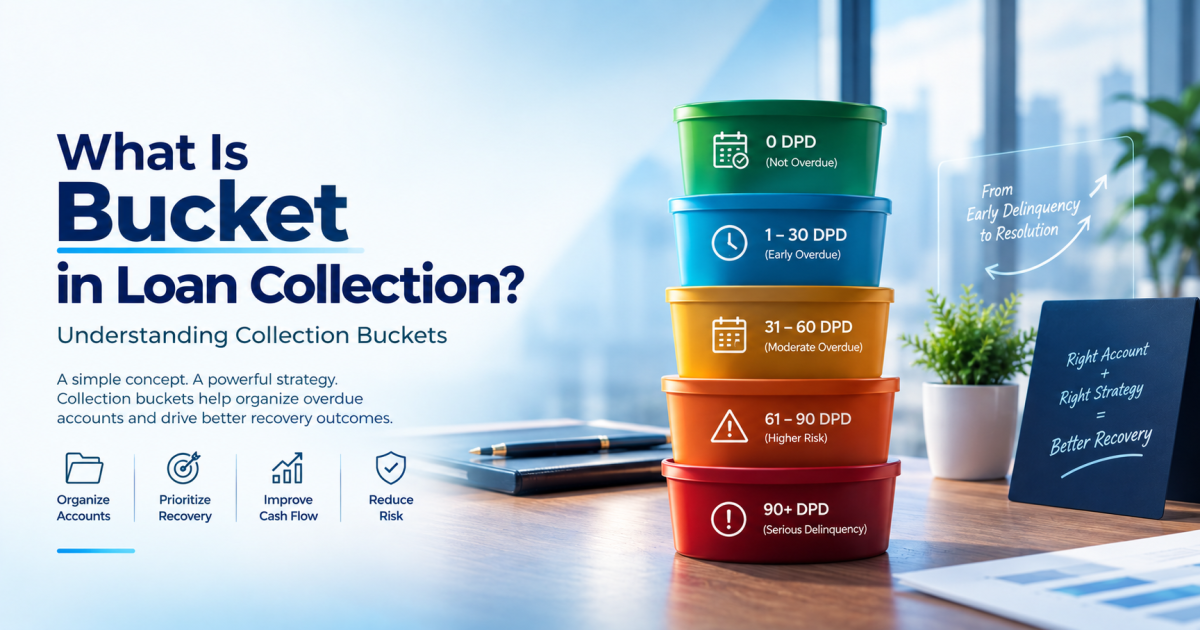
The bucket in loan collection is the group of loan accounts classified according to their Days Past Due (DPD).
For example, a customer who missed a recent payment should be classified as an early bucket account, whereas an account that has not been paid for several months should be reclassified as a later bucket account.
How Do Collection Buckets Work?
Generally, collection buckets are created according to the number of days when the installment is overdue. The actual classification varies from institution to institution.
The simple example of the classification may look like this:
0 DPD: No payment is overdue.
1-30 DPD: Early delinquency stage
31-60 DPD: Moderate delinquency stage
61-90 DPD: Higher delinquency stage.
90+ DPD: Severe delinquency stage.
This classification allows collection teams to identify the delinquency stage of accounts.
Why Are Buckets Important in Loan Collection?
Bucket classification provides the structured approach to collection management. Instead of treating all overdue accounts equally, organizations can prioritize their accounts based on their delinquency stage.
1. Helps to Prioritize Accounts:- It allows teams to identify those accounts that require immediate follow-up.
2. Allows Developing Appropriate Collection Strategies:- Depending on the delinquency stage of the account, different strategies may be required. Early delinquency stage may require just reminder and payment follow-up activities, while the late delinquency stage may require more intense recovery.
3. Allows Developing the Collection Plan:- Bucketwise classification allows collection managers to plan calls, field visits, follow-ups, and other recovery activities.
4. Allows Tracking the Performance of the Portfolios:- An organization can track how many accounts move from one bucket to another.
What Is Bucket-Wise Collection?
The bucket-wise collection means developing the collection plan according to the delinquency stage of an account.
For example, the early overdue account may receive the following steps in its recovery lifecycle:
Reminder → Customer Contact → Payment Follow-Up → Resolution
The late overdue account may require more follow-ups, field collection, and other recovery efforts.
The actual recovery process depends on policies of the lender, customers’ situation, regulations, and portfolio type.
Role of Technology in Bucket Management:
The bucket in loan collection is the group of loan accounts classified according to their Days Past Due (DPD).
For example, a customer who missed a recent payment should be classified as an early bucket account, whereas an account that has not been paid for several months should be reclassified as a later bucket account.
The development of technologies made the bucket management more structured and data-driven. The modern collections systems allow to track account status, payment history, customer information, follow-ups, and collection results.
Dashboards and analytics tools help collection managers to track such parameters as:
- The number of accounts in each bucket.
- Amount of money that is outstanding.
- Trends of payments.
- Status of the follow-up.
- Performance of the collection.
This makes the collection operation more structured and measurable.
Bucket Management and Debt Recovery
Efficient bucket management is an important part of modern debt recovery and collection management. The early detection of overdue accounts allows organizations to initiate immediate communication and payment follow-up.
When the account becomes later overdue, collection strategies should become more focused. Hence, monitoring bucket movement allows collection teams to manage accounts through the whole recovery lifecycle.
How DMT Supports Collection Management
The goal of Dealz Management Technologies Pvt. Ltd. (DMT) is providing technology-enabled and structured collection and recovery operations. The efficient collection management involves organized account management, customer communication, field collection, data-based process, and follow-ups.
Conclusion:
The collection bucket is a practical tool for classifying loan accounts according to the overdue period. It helps collection teams to prioritize accounts, plan their recovery activities, track the performance of the portfolio, and develop appropriate collection strategies.
With the help of structured processes and technology-enabled collection management, organizations can gain more visibility of their loan portfolios and conduct the efficient debt recovery.
Frequently Asked Questions
1. What Is a Bucket in Loan Collection?
A bucket in loan collection is a category used to group loan accounts according to the number of days a payment is overdue. It helps banks, NBFCs and collection teams prioritize accounts and apply suitable collection strategies.
2. What Are the Different DPD Buckets in Loan Collection?
DPD buckets classify loan accounts based on Days Past Due. Common examples include 1–30 DPD, 31–60 DPD, 61–90 DPD and 90+ DPD. The exact classification may vary depending on the lender’s policies and portfolio requirements.
3. Why Is Bucket-Wise Collection Important?
Bucket-wise collection helps financial institutions prioritize overdue accounts, plan follow-ups, allocate collection resources and monitor delinquency trends. It also supports more organized recovery planning at different stages of overdue payments.
4. How Does Bucket-Wise Collection Work?
Bucket-wise collection involves classifying loan accounts by their overdue period and assigning suitable follow-up activities. Early-stage accounts may receive payment reminders, while accounts with longer overdue periods may require additional communication, field visits or other appropriate recovery measures.
5. How Does DPD Affect Loan Collection Strategies?
Days Past Due indicates how long a loan payment has remained unpaid. As DPD increases, the account may require closer monitoring and a different collection approach. Collection teams use DPD information to prioritize follow-ups and track account movement between delinquency buckets.